Labels

Environment (20) Shopping (15) DIY (11) Palm Oil (11) cleaning products (7) Ecology (6) Fair Trade (6) Savings (6) Social (6) baby (6) Food (5) Social Justice (5) health (5) Chickens (3) free range (3) Buy Local (2) Home (2) RSPO (2) Recycling (2) chocolate (2) cloth (2) nappies (2) Christmas (1) Electronics (1) Fish (1) Free (1) Music (1) Native Fauna (1) charity (1) coffee (1) eggs (1) neighbours (1) travel (1)

Tuesday, July 24, 2012

Things we've learnt since moving

Its been a long long time since our last post- 3 1/2 months to be exact! I suppose its the way things go- life gets busy!
We have been at our new place for 6 1/2 months now and have been happy chook keepers for almost as long. For our first post after such a long hiatus, I thought we could talk about some of the things we have learnt, or are in the process of learning, since moving house with a toddler and a lot of stuff.

1. Its so easy to get attached to stuff.
By stuff I mean anything. General stuff. Things that you couldn't bear throwing out when you had space for it due to whatever reason: sentimental or the 'I might need it someday' mentality. We both tend to fall into the latter category.
Freecycle was a god-send. Its so easy to get rid of things using that site- generally within an hour of me posting an Offer ad, I would have replies and in some cases, people would come and pick up straight away.
Much easier and less hassle than auction sites like Trademe and no fees!

2. Reducing your reliance on a car is surprisingly easy
Simple: we just go out when we have something on. We are lucky to be next to a park but also, the shops are in walking distance and Mr nearly-2 doesn't need to go and do a bunch of activities to be happy- he is more than satisfied with a walk- especially when a helicopter is circling overhead or there are lots of trucks around. We do use it when we have things on, but way less than we used to.

3. Auckland's public transport really needs an overhaul!
We were lucky enough to get some inheritance which paid for a cheap and economical motorcycle for going to university and back which means we own one car and one bike. If public transport wasn't so expensive and unreliable, it would be a no-brainer to use it more, but for one of us to go to university on Auckland's north shore, it cost at least $10 per day. The bike, on the other hand, even taking into account registration, maintenance and petrol, its a lot cheaper and way more reliable.

4. Its easy to eat less meat
When we were DINKs (double income no kids) we ate a lot of meat. Living off a student loan, its more of a treat than a regular thing. And that's certainly not a bad thing. The Healthy Food Guide has great ideas for cheap healthy meals (we are lucky we were gifted a subscription, but everything is on their website) and you don't miss out on anything by eating less meat as long as you try to eat balanced. Most of our family is vegetarian and I dont think I've eaten anything cooked by these guys that I haven't liked!

5. Chooks are great
Ok, we might be biased, but we have really loved having chickens. We have a lot more now than when we last posted a blog, but are getting between 4 and 6 eggs per day and our babies haven't even started laying yet!
They eat scraps, their poo is fantastic for the garden and, of course, they produce eggs!
It has been a huge learning curve and we did have a couple of sad experiences but we know so much more now and we look forward to learning even more in the future.

Its been a great 6 months- living closer to family, having a fenced backyard and seeing our little one grow up from a baby to a small person! Here's to the next 6 months!


Sunday, April 1, 2012

Baby chick set up

Since we last blogged, we have acquired another 6 baby chicks (Orpingtons this time) so our total is up to 12 baby chicks (21 chickens all up...). Since we have a few more, our set up has changed, so I thought I would share it with you as it seems to be working really well.

Before getting baby chicks, we did a fair bit of internet reading and came across ADozenGirlz The Chicken Chick. Her blog covers a wide range of chook keeping and has been a very valuable read. It was on her recommendation that we put down a few puppy training pads (or incontinence pads) before our layers of paper towels which is what the chicks live on for the first few weeks. So far, so good! They seem to be doing the trick really well, and we have layered the paper towels so that we only need to take off the top layer every day (unless it gets really dirty).

We bought a heat lamp from Mitre10 and Mindy's (our housemate) father rigged it up for us. If he hadn't done that for us then we would have bought a fitting and a lamp from the bird barn (pet part) which they use for baby chicks but also reptiles. Thanks for saving us nearly $100! :)

We bought a water feeder from the bird barn as it isn't safe having bowls of water in with new chicks as they can easily drown. We have 2 feeders in there- a bird one and a home made upside down planter on a plate- this will hopefully stop the chicks from scratching and pooing in their food!
The screen keeps it secure, but we still keep the cat well away from this whole area just in case!

So here it is in its glory:

Baby chicks enjoying a dust bath
Will keep you posted as the chicks grow!

Tuesday, March 27, 2012

We had a plan...

We got a set of bantams fairly soon after moving house. We've always wanted chickens, and luckily our new housemate did too!
Bantams are great- relatively friendly, cute as a button and easy to keep. Out of 5 bantams, only one of them currently lays eggs though... Its the wrong season, of course, but what we really want are some hens to lay us some beautiful free range eggs.
Bantams are apparently really good mothers and get broody really quickly. Same with a hen we were given too. But as luck had it, none of them have had the inclination so far.


So what did we do? Well, we got some fertile eggs anyway. Luck would have it that Kel's brother's hen was broody, so we gave them to him and his wee hen sat on them for 21 days.
The time arrived, and so did one chick, but no more. And then that chick died.
Sad times indeed.

Instead of wondering what to do next, we took the plunge and bought 6 three day old chicks off Trademe. (off a great breeder based in Helensville) Hopefully they will be all hens and will be our good layers, but we wont know for a while yet!


Having chickens has been a good learning curve- even more so with the babies. Its so lovely having them in our back garden, eating all our wandering jew, talking away to themselves.

We'll update their progress soon

Sunday, March 4, 2012

Easy DIY Lip Balm

Using this recipe HERE I went ahead and made some lip balm of my own! I adjusted the recipe and have included it for you below.


This recipe makes a more chapstick texture balm and would be perfect in a recycled chapstick tube.

This makes about ~30 mls (give or take...), though I did use 2 recycled containers. Here is how I did it.

Lip Balm
1/8 cup beeswax
1 1/2 TB shea butter (you could substitute cocoa or another vegetable butter)
1 TB coconut oil (or other carrier oil- The original recipe suggests Safflower oil. I used coconut as its quite solid and it is a great moisturiser)
2 drops essential oil of your choice (I used Lavender)
optional: a teeny shaving of lipstick to give it colour.

Gently heat the beeswax, shea butter and coconut oil in a double boiler.
Once it has melted, mix in the essential oil and colour if so desired.
Pour quickly into your containers and let set.

See? Easy! For a more spreadable, melt-able balm, add and extra tablespoon of butter or oil (whichever's cheaper haha!). You can experiment with other butters and oils to get something more suited to your needs.

Aside from being quite hard, it seems to work really well and lasts nicely on my lips.

I sourced the beeswax, butter and coconut oil from Lotus Oils though you might be able to find it cheaper elsewhere. Two thumbs up to Lotus Oils for delivering less than 48 hours after my order!

Please do let me know if you give this a go.
Kudos to Gweneth at Yours Truly, G for the original recipe and idea.

Friday, February 3, 2012

Adventures in Sourdough

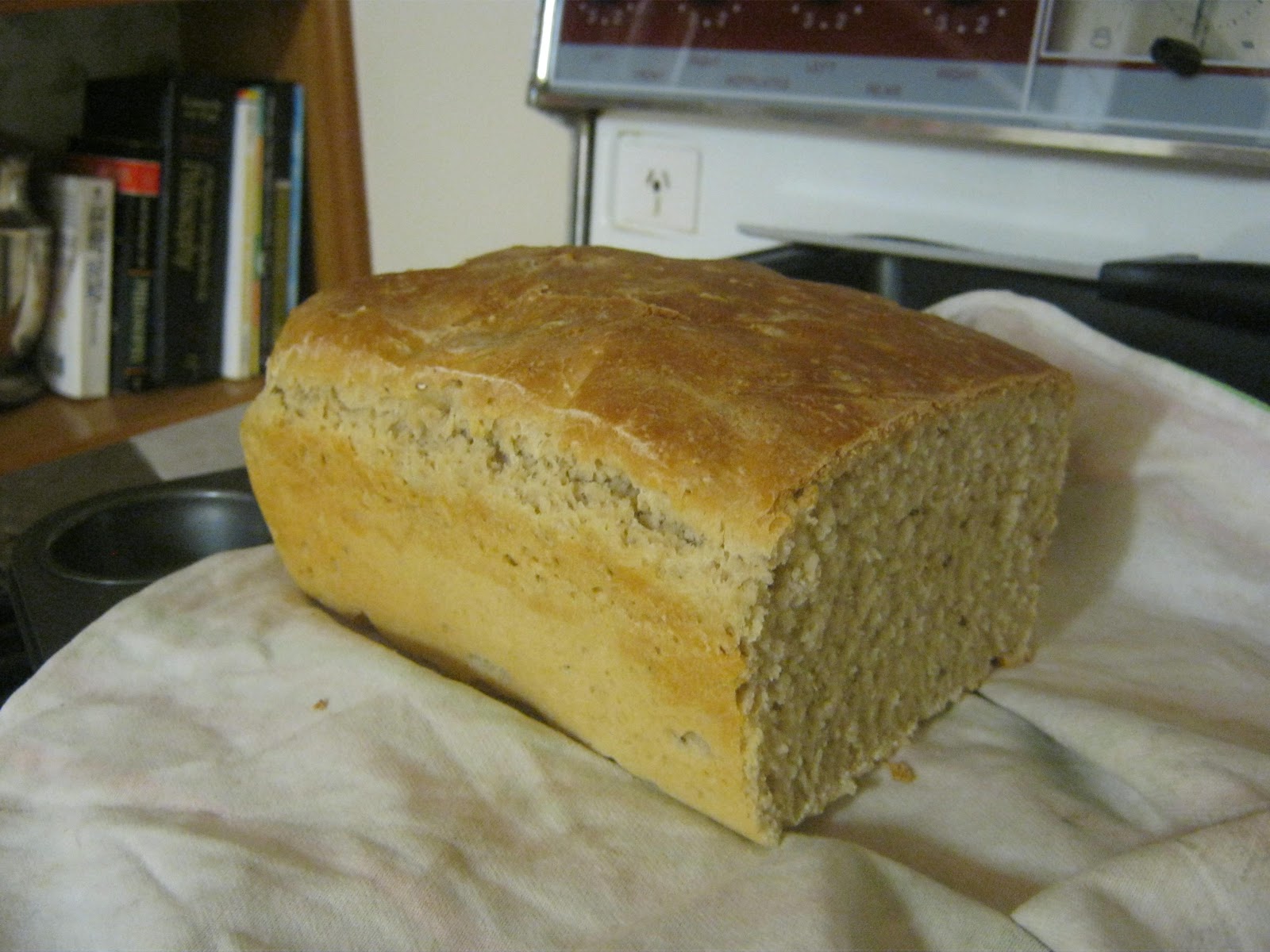
We have a lovely active sourdough starter which is around 5 months old now and makes the most amazing bread. Although there are a lot of ways you can do it, we thought we should share how we did it.

We pretty much followed the recipe and method HERE though we substituted malt for the honey as that is what we have. There are lots of ways to make a starter if you don't already have yeast, but they seem to take longer and you get varied results. Once this process is done, you just need to make sure you feed it regularly so that the yeast doesn't die.

We found that if we fed it the 1/2 cup water and 1 cup flour, it would always vary as to the consistency we got after it had been fed, so now we feed by weight. Usually I feed 100g plain flour and 100g luke-warm water.
I found this information on a website that I can no longer find, but it has worked for us so far.

You will notice that when you check your starter (before you feed it) there will be a green, grey or brown liquid sitting on the top- don't worry- this is just the alcohol from the fermenting yeast. If it turns pink or the starter smells bad (its meant to smell alcoholic), then your starter has gone bad. If you get to this point, then there might be a way to fix it here


I should have taken a pic of our starter before I stirred it, but here it is in all its wonderful, gloopy glory.
mmm potent...

I have experimented with a few different recipes but this one seems to work really well, and is done all by weight, which is much more accurate than volume. I cant, for the life of me, find where I originally got this recipe from, though it has been a little modified. Apologies to whoever created it!


Sourdough using a 'fed' starter
*your starter needs to have been fed a couple of hours before using until its doubled in size

300g fed starter (~ 1 3/8 cup)
500g flour (~ 2 7/8 cups)
2 TB oil (we use rice bran)
3 tsp sugar (sometimes we substitute honey or malt)
2 tsp salt
enough luke warm water to form a dough

Add the flour to the starter gradually. 
Add in enough water to form a kneadable dough (but you dont want it too sticky) 
Mix in the rest of the ingredients. 
[NB: I also added a handful of kibbled wheat]

Knead the dough for 6-8 minutes until elastic (make an indent and if it springs back, its elastic) 
see here for some great info on basic breadmaking


Then I clean the bowl, oil it a little, put the ball of dough back in and let it rest for 15 mins.

This information I got from reading, re-reading and reading a bit more, a bread book by a kiwi lady called Take Our Bread (by Marcelle Pilkinton). I made bread before reading this, but through her book I've really learned how to make bread.

After the rest period, form into loaves (or whatever- I love to make plaits) cover and set aside to rise for 1-2 hours, or until its doubled in size. The day I made this load, it took around 3, but it was a relatively cold day and I dont think I let my fed starter sit for long enough before using.


Before baking, brush with an eggwash or milkwash if desired (and it does make it look awesome)

Dont preheat the oven. Place in a cold oven and turn to 190 bake.

Bake for 30-45 mins or until the loaves sound hollow when tapped and look golden brown.

Let cool for 1 hour before slicing.


Yum!

We are still newbies to the whole idea of sourdough, so any advice would be warmly welcome.


Thursday, January 19, 2012

New starts

So we've finally moved house. Been here for just over a week now and it's been great!
So here are a few things we have done or thought about during the break:

De-clutter: 
While we were packing up our stuff for moving, we utilised Freecycle and got rid of furniture and other bits and pieces. Also discovered a new website in the same ilk called FreeStuff though we haven't used it yet. We do highly recommend signing up and using it to get rid of unwanted stuff- everyone has stuff they need to get rid of- why not give it away?

Chickens:
The house we are living in (we are housesharing- we have the downstairs and they have the upstairs) is getting chickens. Very exciting and we are looking forward to not only getting fresh eggs but learning more about how to raise them, care for them and whatnot. Apparently chicken poop is also great on the garden.

Veggies:
While our last attempt at a veggie garden at the old house wasn't all that successful (for the most part) we are looking forward to be able to try again at this place. So far Em has learned not to over plant (a rookie mistake) and also to read up on when to harvest said vegetables (a silly mistake).

Meal planning:
We were really great at this... until we started packing up our stuff to move. We will definitely be meal planning in the very near future- not only for costs sake but also convenience. It wasn't hard to do in the first place and made life way less stressful around dinner time- especially with a destructa-toddler running around eating us out of house and home.

Less computer time:
It is far too easy for both of us to get addicted to the computer- spending hours doing pretty much nothing and achieving just as much. The way this house is organised is a lot less open plan so this time around the computer, while still in the living space, is not so much the focus of the house any more.

Toothpaste, sunscreen and other such things:
Em has been brushing her teeth with baking soda/salt (a mixture that one of you kindly directed us to) but K is on the look out for an alternative to the toothpaste that's on the market right now- full of all sorts of stuff- a lot of it really unnecessary.
Same with sunscreen. K will do a big post about sunscreens soon after more research

TMI for the guys, but for the women, please do have a think about alternatives to your normal menstrual products. While we have been trying to research this, and have been finding it hard getting statistics and other information about pads and tampons and how they are produced, we will continue to look into it and do a proper post in the fullness of time. In the meantime, please check out EnvironMenstruals which is a company based in Christchurch and their website has a lot of information about alternatives. Mooncups might look scary but they are reusable, easy to use and will save you money long term.

So here's to a new year, a new place to live for us and some new changes afoot.


Monday, January 2, 2012

Resolving conflicts

We have tried to keep this blog's topics pretty wide, but at it's most simple we focus on three things: the environment, health, and social impacts. These are by no means isolated areas however - some issues can easily been seen as covering all three. For example, a dangerous chemical used in a product is a concern for our health but it may also be a concern for the people manufacturing the product (making it a social concern) and it also might cause pollution when waste products are discharged from the factory (making it an environmental concern).

Often it is not that simple however. Some products might but better than alternatives in one area and worse in others. For example, Palm oil is better for our health than both butter and trans fat containing margarine; but both these alternatives are are more environmentally friendly than palm oil. So we are forced to decide between these competing issues.

I suggest that these three issues can be ranked so that, all else being equal, one trumps the concerns of another.

1. Social
2. Environmental
3. Health

A lot of people will disagree with me ranking Social above Environmental, but I am shamelessly anthropomorphic and think that the extreme suffering of humans is of a more urgent concern than environmental ones. Don't get me wrong, the environment is important in it's own right and in the sense it is where humans live, but social concerns are more important to me (you can rank differently if you want). Health, I think is pretty non-controversial to put third as it is a 'selfish' concern - it mainly only effects ourselves and those we buy for. We can always eat small amounts of butter over palm oil to use the above example.

In light of this we will be writing more about social concerns in the future to balance all the posts about the environment so far.

any comments?

Wednesday, November 30, 2011

This time of year

Sorry, its been a while since we last posted. No excuses really- we've been around, not particularly busy- just not posting!

So its 25 days until Christmas... a time of the year that I have never particularly enjoyed to be honest.
I have found it stressful, expensive and overall way too commercial. Around October, shops and malls start their advertising, lulling you into their stores to buy crap that you, and your loved ones, probably don't need.

So how do we make this time of year a more focussed, less commercial and ultimately more enjoyable time?

Well, I'm not entirely sure. But I do have some ideas.

Christmas means lots of things to different people. For us, its the celebration of the birth of Christ. Not the most important celebration of the year, but important nevertheless.
For us, it shouldn't be about the presents, the tree, the food. Not saying those things aren't great- though we don't really do a tree. (does a Kauri count? probably. It'll be the first time in years we will have decorated something).
So here are my ideas:

Less presents. Less crap. If you're buying presents, think about what they are, where they come from and whether they will actually be used/loved/needed. Try making something? Many people we know do baking for christmas- which can be good especially if its freezable.
In our family, we have started drawing a name out of a hat which means we only buy/make for one couple. So you still get presents, just less- but probably more awesome/personalised ones.
On a side note, those packaged christmas cookies are terrible. Does anyone actually like them? Cookie time cookies are yum and palm oil free.

If you don't enjoy it, don't do it. If the thought of putting up a tree gives you the cold sweats, perhaps reconsider why you do it. If it's important to your family, then maybe do it as a family, or delegate it to someone who wants to do it.

Food. Christmas food can be whatever you want it to be. We are lucky in NZ having Christmas over summer so we are more comfortable with the idea of a BBQ on Christmas day. Don't feel pressured into doing the big roast if you really don't want to. My family did an eggs benedict brunch last year and plan to do it again this year. It helps that my sister in law is a great cook and did a fantastic job, but you can do whatever works.

What helps you stay grounded at Christmas? Do you disagree with anything we've said? Please share your thoughts/arguements etc!

Sunday, November 13, 2011

"Wasteful kiwis still biffing costly fruit and veggies"

... is the title of THIS article posted on the Stuff.co.nz website this morning.

In a nutshell, we (kiwis) are still buying more than we need, cooking more than we need and throwing out the rest.

Food prices have increased, petrol prices have increased, general living costs have increased but we are still throwing away thousands of dollars of food a week.

I know for me personally, if something is on special it is very hard for me not to buy it- and in the past this meant that food has gone to waste- in the bins and in the compost. Since we have been doing meal plans (for dinners mainly) our food waste has been greatly reduced as we are only buying and consuming what we need.

So, how do we reduce the amount of food we waste?

Meal planning
If you know what you are going to eat, you wont buy unnecessary food items and therefore you hopefully wont waste them. Meal planning doesn't have to be set in stone- we often interchange what we have planned with another day, but we try to stick to a weekly plan as much as possibly.

Buy what you need
Don't go out and buy all of those cheap-as-chips specials and deals if you aren't going to consume them or use them (ie preserves, frozen meals etc) in time.

Eat or use your leftovers
So often, we don't really feel like eating the same as what we ate last night for the 2nd day in a row... If you know this will be the case, perhaps put some aside as a frozen meal (if possible) or give it away. Nanna popped over for a visit recently and we had lots of leftover casserole from the night before- she was very happy to take some home for her tea.

Store well
If you do decide to buy 20kg of potatoes because they were $1 at the local market, make sure you store them well where they wont go off fast. Same goes with any perishables. If you need to refrigerate something, make sure you remember its there! Many a time I have gone to the fridge and found something oozing at the bottom because I had completely forgotten about those <insert perishable>, even though I really wanted to eat them.

Do you have any more ideas for how you personally reduce the food wastage in your household? Please share them below- we'd love to hear from you!

Thursday, October 27, 2011

Garden update

So it's week 3 of using coffee grounds to repel snails and so far, so good!
Part of me does wonder whether its also due to the fact that I have companion planted marigolds along side the veggies, along with a flower which we planted ages ago and can't remember what it is!

So these first couple of pictures were taken the day I first posted about trying a natural snail repellent here
L-R: Strawberries, forgotten-name flowers, brussel sprouts, spinach and a couple of herbs in there somewhere

L-R: herb pot (coriander & parsley), snow peas, thyme and marigolds


These photos I took a few minutes ago. Don't you just love the light on a spring morning?
One a little moth-eaten, but pretty good

So far so good here too. 

Sadly, the basil's a bit eaten, but otherwise ok. 
So, as long as one of us is having a morning coffee, I'm going to continue with the coffee grinds and see how we get on.

Now I need to work out how to prevent white moths... oh and the birds from eating the strawberries! Any suggestions/tips/comments will be greatly appreciated!

Saturday, October 22, 2011

DIY Cleaning Products: Tips

One of the problems we have found with making out own cleaning products is that they tend to solidify over time (especially if the area they are stored in gets cold overnight). We are talking here about recipes that use soap of some kind (for us that means, dish washing liquid, hand wash, and laundry detergent). Commercial products contain ingredients to stop that happening but not when you make it yourself. Here are some tips to solve this problem:

  • Make sure you use the right amount of liquid and soap when you make up the recipe 
  • Always give the bottle a shake before using.
  • If it gets really thick then pour the bottle into a mixing bowl, add a little boiling water at a time while mixing with an electric mixer on low or a whisk. When it looks like the right consistency pour it back into the bottle.
  • Ecostore soap makes products of a better consistency than Sunlight Soap. 
Let us know if you have any other issues.

While I'm talking about this, I found yet another source of soap; Trade Aid. You can buy their soaps from Trade Aid stores or online and they only cost $3. As everything Trade Aid sells is fair trade so these are sustainably  produced (even the palm oil!) and the workers get a fair wage. More info here. I have not yet tried these soaps in a recipe but I don't see any reason they would be much different to the Ecostore soaps as they have similar ingredients.

Anybody found another good source of soap?

Saturday, October 8, 2011

DIY Cleaning Products & Ecostore

Like the new blog design? I got distracted when I was meant to be writing this post!

If you are looking for an more environmentally friendly alternative to sunlight soap that doesn't cost $10 a bar then try  Ecostore bar soaps. I picked up one for about $1.80 from New World. They are a bit smaller than the average bar soap so to get the same amount as 1/2 a bar of sunlight soap (as required in this recipe) you will need almost a whole bar (60g out of a total of 80g to be exact, use scales is my advice).

Now, they do contain palm oil and I have given Ecostore a lot of flak in the past about their use of so called 'sustainable' palm oil. But recently Ecostore have been using a programme called GreenPalm. This is how their website describes the programme:
"Ecostore supports the production of sustainable palm oil through the GreenPalm programme. This means that for every tonne of palm oil/palm kernel oil we use in the production of ecostore products we have paid a voluntary premium to a palm oil producer which is operating within the Roundtable on Sustainable Palm oil’s (RSPO) strict guidelines for social and environmental responsibility." - http://www.ecostore.co.nz/about/palmoil.html

The way I understand it is that for every tonne of palm oil Ecostore buys, they send a premium directly to RSPO sustainable growers regardless as to whether Ecostore actually bought any palm oil from those growers. This is necessary because at the moment it is impossible to know which grower grew a particular shipment of palm oil or whether any of it is sustainable. This is because palm oil from different growers is mixed up when it is processed. The GreenPalm programme means that sustainable growers are rewarded despite the lack of traceability in the industry.

This is a major improvement from Ecostore's previous policy ('we're a member of RSPO so it's all ok') but it still relies on the RSPO definitions and policies on what 'sustainable' palm oil is (which are not ideal) and on their auditing system (which, from what I've read is practically non-existent). More on the RSPO here.

So as far as I see it, GreenPalm certified palm oil is a big improvement and I think it is good enough to be supported as a step in the right direction, but it should not stop there!

Thursday, October 6, 2011

Natural snail repellent- phase 1

I'm a newbie to gardening- getting better, mind you, but still very new. We have a small veggie garden which seems to be chugging along ok but Ive just noticed that the snails seem to be back... Since I've just planted some snow pea seeds (now seedlings) I really want to beat the snails before they eat them all! Since we are trying to be less damaging to the environment and have a little one who loves the garden, we will be trying all sorts of things to rid our garden of these pests.

Week 1: coffee grinds

The coffee plunger is used every morning, so we tend to have coffee grinds every day. Some websites reckon its a great way to repel the snails, other websites dont think it works. So here we go!

I put the grounds around the seedlings this morning which are in a half barrel.

What other methods should we try?
Egg shells, sandpaper around the bases, diatomaceous earth, beer pools?

What has worked for you? What hasn't? Any suggestions would be great

Dirt is great!

Saturday, October 1, 2011

The Good Stuff: Cookies!

This segment highlights the good things out there. Products that by design or chance are free of all the ingredients and practices that we keep banging on about. So enjoy!


I'm not sure if we have mentioned this before but pretty much all supermarket biscuits contain (or probably contain) palm oil. We don't eat a lot of biscuits but when we do we generally make out own. But when you want a biscuit in a hurry though what are your options? 

Sunday, September 25, 2011

A shout out to those without motors

Neither of us are cyclists. Sure, we have a bike which we use casually and really need to use more often, but we aren't really cyclists. 
I have some serious respect for those who forgo their motored vehicle and head out on two man-powered wheels every day- especially in a city like Auckland where the motorists, well, aren't very accommodating to say the least. 


So here's to those who choose to power their own mode of transport, here's to those who take one car off the road and here's to those who brave the unforgiving traffic and help to make Auckland and other cities more cycle (and pedestrian) friendly. 


Here's a wee promise too:
We, as drivers, promise to leave lots of room for you when we pass.
We promise to take a breath if we get annoyed and remember that getting annoyed for being 30 seconds later is just plain silly
We promise to look out for you and be as courteous as we would expect you to be if we swapped places


As a footnote, big ups to organisations like Cycle Action Auckland who state that their aim is "to make Auckland a great place to cycle" and they do this by promoting shared road safety and advocating for an improved cycling environment. 

Sunday, September 18, 2011

Company profile: Better World Books

Better World Books 


What do they do?
They are an online bookstore based in the US selling new and secondhand books and specialise in used textbooks. They offer free shipping worldwide and as the current exchange rate is in our (NZ's) favour, its a cheap place to purchase from.


I chose Better World Books to profile for a few reasons.


1. They resell second-hand books from all around America:
Seriously great way to recycle- rehome a used book to a new home. They also donate books to organisations they support and if the book is unsuitable for sale or donation, they recycle them. They have re-used or recycled over 70 million pounds (31,751.5 metric tonnes) of books.


2. While they ain't a not-for-profit, they do give a lot away:
They partner with a few non-profit organisations including Invisible Children and as of August 15 this year, had given over $5.5million to literacy and education organisations in America and worldwide and $4.5million for libraries all over America. For more specifics, see here.


3. And, well, they're a bookstore and we love bookstores:
Even ones located on the other side of the world. A recent quote on their Facebook page really jumped out at me. It said:
"Lord! When you sell a man a book you don't sell just twelve ounces of paper and ink and glue - you sell him a whole new life. Love and friendship and humour and ships at sea by night - there's all heaven and earth in a book, a real book." -Christopher Morley
They also offer a carbon offset option when ordering books, for a few extra dollars. Which can help, well, offset the environmental cost of shipping from America. Remember also that a lot of the books you buy, even in bricks and mortar stores, were not printed in NZ!

Monday, September 12, 2011

The problem with bath toys...

When bub was around 12 weeks old, we attended a Plunket PEPE course which is designed to help out new mums by providing advice, support and education. The course itself was fantastic, and we would recommend these kinds of courses to just about everyone.

A negative was one comment that a guest speaker said which has been ringing around in my head ever since. She was talking about the importance of getting babies used to water (great stuff) and talked about bath toys. Apparently the ones that have 'squirting capabilities' get really mouldy within a month- even if you sterilise them. Her suggestion was to buy new ones from the $2 shop every month and dump the rest.
It horrified me that she was effectively promoting adding a bunch of these brightly coloured, mostly non-recyclable items to landfill every month. She didn't seem to understand my issue with it either, sadly enough.

So what do you do with a bunch of bath toys you can't use in the bath? It would be great if you could give us some suggestions!

Also, how do you deal with people who just simply dont understand (or want to)?

Thanks!

Saturday, September 3, 2011

What can we say on a day like today?


...but Happy Birthday our darling. One year has gone so fast and we've learnt so much.
Here's to many many more birthdays and learning so much more about life from you.
We love you, Mum & Dad


Thursday, August 25, 2011

'No poo' update

Its been about 16 weeks since I stopped washing my hair. Most sites about going 'no poo' that I have read state that it takes around 6 weeks for your hair to regulate its oil supply. For me it took a little longer, but that doesn't mean that I had greasy, lank hair for that whole time- rather it was days of 'ponytail hair'.

I started out at first just rinsing with water every day and massaging my scalp, but I found that I ended up with dandruff. A month ago, I found that if I do a weekly baking soda and cider vinegar wash, my hair ends up looking even better and with little or no dandruff.

I'm glad I started, as its so nice not having to buy shampoo or conditioner and I don't have to worry about the chemicals I'm putting on my skin.

HERE is the link to our original post back in May and below is my baking soda/cider vinegar routine, inspired by the Instructables post here


Baking Soda Wash:
1-2TB Baking soda
Add 1 cup water.
Apply the mixture to your hair- particularly at the roots, and massage in.
Rinse thoroughly

Cider Vinegar rinse:
1-2TB apple cider vinegar (I dont tend to measure, I just slosh it in)
Add 1 cup water
Work it in the same way as the baking soda and rinse completely.


Healthy hair for the both of us!


Monday, August 22, 2011

DIY Laundry Detergent: Costs compared

One of my major reasons for making your own laundry detergent was cost; but how does it really compare?  Prices vary so I've looked around and taken a rough average (eg. Ecostore was around $9 at PacN'Save but around $12 at Countdown so my average is $11). Hopefully the calculations are pretty accurate, if you spot any mistakes let us know in the comments.

The Competition:
Ecostore Laundry Liquid Ultra Concentrate: 28 washes per litre (35.7ml), $11 per litre. = $0.39 per 35.7ml wash

Earthwise Ultra Laundry Liquid: 37 washes per 750mL  (49.5 washes per litre), $7 per 750mL ($9.33 per litre).= $0.18 per 20.2ml wash

Persil Small & Mighty Cold Water: 14 washes per 475mL (29.5 washes per litre), $7 per 475mL ($14.74 per litre). 14.74/29.5= $0.50 per 33.9ml wash

Budget Laundry Detergent: 1/4 cup (60ml) per wash (16 washes per litre), $4.45 per 2 litres ($2.23 per litre). 2.23/16= $0.14c per 62.5ml wash

I would have loved to do some other brands (such as Dynamo as we used to use it) but they didn't have number of loads or usage in mls on the bottle. I would have had to buy and measure out to find out the necessary data (which I wasn't prepared to do, sorry folks!). Anyway out of the products I surveyed, Budget was the cheapest, followed by Earthwise, with Ecostore coming in third. But how did the homemade stuff stack up?

Homemade laundry detergent
50 g Borax - $0.80 (500g: $8 Soapcraft)
½ cup washing soda (130g weighed on our kitchen scales) - $0.54 (1kg washing soda: $4.19 at Foodtown)
7.5litres of water - Free*
20 drops essential oil - $0.41** (12ml eucalyptus oil: $5 Soapcraft)
½ bar grated sunlight soap - $0.39 (500G (pack of 4) $3.14 at Foodtown ($0.78/bar)
OR
½ bar grated dr bronners castille soap = $5 (140g bar $9.99 at greengoddess)

½ cup of laundry detergent per wash = 125ml per wash.
7500ml / 125ml = 60 washes

Total cost to make: $1.73 no essential oil, $2.14 with essential oil, $6.34 with castille soap and no essential oil, $6.75 with castille soap and essential oil

$0.02 per wash without the essential oil and $0.03 per wash with essential oil. $0.10 per wash with castille soap but no essential oil, and $0.11 with castille soap and essential oil. 

So ridiculously cheap with sunlight soap and merely very cheap with fair trade castille soap. I suppose we haven't factored in the 'labour cost' but in reality, it doesn't take us much time to make anyway. And we use recycled milk bottles to put it in, so no cost there. We used sunlight soap the first time because $10 seemed like a stupid price for one bar of soap and we weren't sure the recipe would be as good as shop bought products, but after doing the calculations we will definitely use the good stuff next time!

So even ignoring the ecological benefits (which I'm not sure how I would even start to calculate) making your own laundry detergent definitely makes sense.


*Well, not actually free unless you collect rainwater but we don't know how to calculate the cost of this!
**We have gone with the general rule of thumb (and found on various places on the net) as 20drop/ml. Though technically this rule is for water, it gives us an approximate costing of the oil.
***obviously these numbers had to be viscously rounded to get numbers that makes sense in $ terms.